
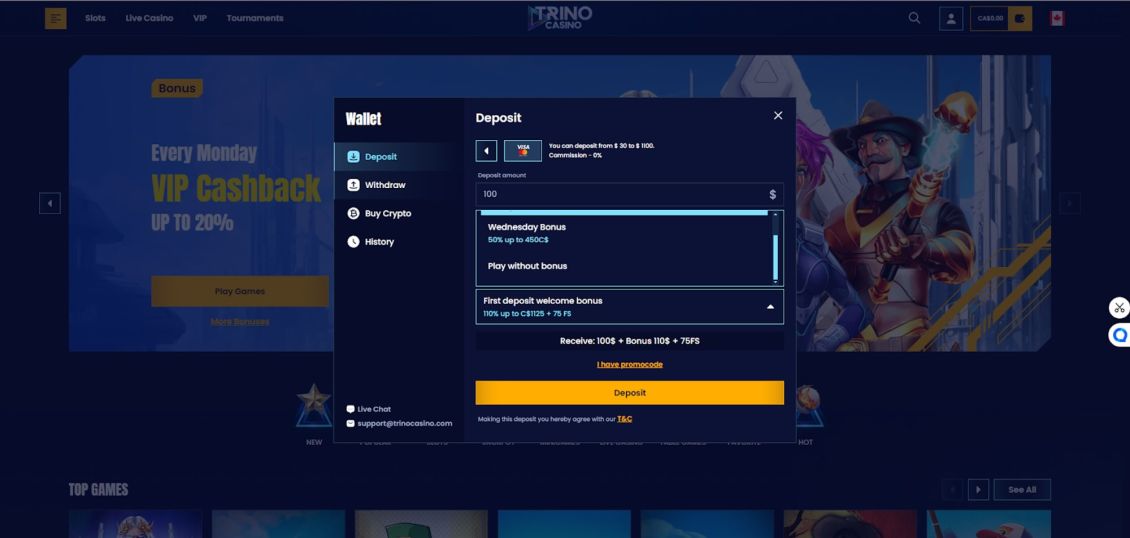
The casino cashier is the monetary center of any online gaming platform, but the majority of players scarcely consider it until they want to move money trinoo.de. At Trino Casino, the cashier section is constructed to strip away friction. Deposits arrive instantly. Withdrawals process with as small a delay as the banking system allows. Comprehending how this digital banking terminal functions transforms a standard transaction into secure and efficient. The cashier is not a fixed page. It acts as a dynamic gateway linking a player’s bank account, e-wallet, or cryptocurrency wallet right to the gaming floor. Behind the scenes, encryption protocols and payment orchestration layers coordinate to verify identity, block fraud, and comply with German financial regulations. For players in Germany, grasping the cashier mechanics marks the beginning of responsible bankroll management. The interface usually combines dozens of regional and international payment methods, each with distinct processing times and limits suited to different preferences across the German market.
The fundamentals of a Digital Cashier
In an online casino, the term “cashier” refers to the unified banking portal where every economic transaction occurs. Unlike a tangible exchange of chips at a physical venue, the digital cashier automates fund movements through secure application programming interfaces. When a player from Germany logs into Trino Casino and opens this section, a specific balance sheet appears. It shows the live available balance, bonus funds, and any outstanding withdrawals. The technology underneath aggregates data from multiple payment processors so the numbers on screen stay accurate to the last cent. This financial dashboard is designed with a strong focus on data integrity, catching discrepancies before they cause issues. Most modern cashiers also include a transaction history module, a personal ledger that tracks every deposit and withdrawal timestamp. German players generally appreciate thorough record-keeping for personal budgeting, and this transparency delivers exactly that. The design of a well-built digital cashier emphasizes logical navigation, placing deposit and withdrawal buttons in clearly separate zones to cut down on user error during high-stakes moments.
The Withdrawal Mechanism and Authentication
The psychology of the cashier shifts when a player switches from the deposit tab to the withdrawal section. Expectation substitutes urgency, and the cashier becomes a verification checkpoint as opposed to a rapid gateway. The cash-out workflow is intentionally more measured. It integrates mandatory security gates that protect the gamer and the operator from unauthorized payouts. A common first step requires the player to settle any active wagering requirements tied to bonus funds, a check the cashier’s logic engine performs automatically before the “submit” button gets active. In compliance with German anti-money laundering directives, the cashier serves as the front-end auditor, upholding the closed-loop policy. This policy stipulates that withdrawals go back to the original deposit method when technically feasible. If a credit card funded the account, the cashier will prioritize refunding that card up to the total amount deposited ahead of offering alternative payout corridors. This structured hierarchy guarantees a clean financial trail that holds up under regulatory audits.
Verification Steps at the Point of Payout
The cashout process is often the point at which the cashier interacts with the player verification department, sometimes known as the Know Your Customer protocol. Before a first payout can be approved, the cashier might pause the queue and request a one-time upload of identification documents. This digital handshake between the banking interface and the compliance database is critical for players based in Germany, where regulatory identification standards are particularly stringent. The interface usually offers a secure upload portal within the cashier area, supporting high-resolution scans of identity cards or passports along with a recent utility bill or bank statement for address confirmation. Advanced cashier systems use optical character recognition to verify the data instantly, shrinking the manual review window from hours to minutes. Once this verification status turns green inside the cashier’s memory, subsequent payout requests shift into a fast-track queue. The system recalls the authenticated identity unless a critical data point changes, such as a payment method or residential address. At that point, the cashier activates a re-validation hold as a security precaution.
Withdrawal Speeds and Waiting Times
A common point of confusion within the payment landscape is the distinction between processing times compared to pending periods. As soon as a player at Trino Casino starts a withdrawal, the cashier directly debits the game account and puts the money into a “pending” state, visualized separately in the transaction ledger. In this pending phase, the player can reverse the withdrawal and send back the money to the gaming balance with a single click, a feature triggered using the cashier interface. This period of reversibility is available to address player psychology, often preventing the need for a additional deposit immediately after a payout request. When the cashier’s internal financial team processes the request and the status shifts to “processed,” the funds depart the casino ecosystem entirely and enter the banking network. The speed from processed cash to bank account settlement is entirely dependent on the external payment provider. E-wallets commonly reflect in minutes. Bank transfers follow standard German banking cycle times. Experienced players monitor the cashier status indicators to understand exactly where their funds sits in the chain.
Money Processing and Conversion Tiers
A advanced cashier acts as a invisible foreign exchange broker for players working across currency borders. The intended users in Germany mainly deals in euros, but the cashier at a worldwide site like Trino Casino must accommodate multi-currency accounts for those holding balances in other denominations. Real-time exchange rate feeds enable the cashier show accurate balances even when the backend wallet is different from the preferred display currency. When a deposit starts from a Swedish bank in kronor or a crypto wallet in a fluctuating digital asset, the cashier’s conversion layer quotes a live rate and holds it for a couple of seconds, a mechanism termed rate locking. This stops slippage from eroding the deposit value during the short transit time across the payment channels. Transparency in the conversion margin is a sign of a reliable cashier. Hidden spread markups hurt player trust. The monetary interface commonly has a currency selector that keeps the choice across login sessions, sparing the German player from repeatedly converting values mentally every time they access the banking section to check their financial standing.
Security Framework of the Financial Portal
The online casino cashier is the highest-value target for malicious actors on any gaming site, which necessitates a security posture far surpassing that of ordinary landing pages. Transport Layer Security encryption wraps every data packet flowing between the player’s device and the payment backend, so card numbers and banking credentials cannot be read in transit. Beyond basic encryption, the cashier at Trino Casino incorporates tokenization technology, swapping sensitive account details with randomly generated tokens that are ineffective outside the specific transaction context. The interface also enforces session timeouts, automatically logging a customer out of the cashier after a short period of inactivity to protect against illegitimate access on public or shared computers. For players in Germany who emphasize digital privacy, the cashier delivers a clear log of access attempts, detailing the web browser and location and timestamp of each login. This audit trail lets users detect unusual activity immediately. Multi-factor authentication is commonly applied onto large withdrawal attempts inside the cashier, necessitating a time-limited code from an authenticator app before the payout execution begins.
Managing the Payment Workflow
Adding money is the most frequent action in the cashier interface, and the workflow is designed for speed. The moment a player selects the deposit tab, the system recognizes the jurisdiction and shows a curated list of payment options popular and legally available in Germany. This regional filtering means a user in Berlin won’t encounter banking methods that are irrelevant or banned in their region. The process usually involves choosing a payment method, specifying the amount, and confirming the transaction through a safe redirect or a two-factor authentication prompt. At Trino Casino, the cashier prioritizes instant processing. Funds appear in the gaming wallet ahead of the browser completes refreshing the page. Modern cashiers utilize a “smart amount” memory that stores previous deposit values, letting high-frequency players repeat transactions with a single click. Behind this simplicity sits a complex chain of anti-fraud checks that examine transaction velocity and device fingerprint without affecting the page load speed.
Understanding Minimum and Maximum Limits
Every payment gateway inside a cashier works under established boundaries called minimum and maximum transaction limits. These thresholds are not arbitrary. They fulfill regulatory requirements in Germany while balancing the operational costs tied to processing fees. The minimum deposit limit keeps the transaction cost from consuming the deposited value, safeguarding the operator from wasting money on micro-transactions. On the other end, maximum limits act as a responsible gambling safeguard, blocking impulsive high-value transfers that could lead to financial harm. German regulatory frameworks more and more emphasize player protection, and the cashier at Trino Casino reflects this by letting players set personal daily, weekly, or monthly deposit restrictions straight inside the interface. By modifying the slider tools in the cashier settings, a user can impose strict discipline on their entertainment budget. Players should check these limit parameters before initiating a transaction. Otherwise, an unexpected error message may decline the transfer based entirely on boundary violations.
Declined Deposits and Rapid Reversals
Even with solid tech powering online cashiers, sporadic transaction failures happen. Network timeouts or insufficient funds at the source are frequent culprits. When a deposit fails in a reliable cashier environment, the system triggers an instant reversal mechanism. Funds don’t float in limbo. Unlike standard banking, where a pending charge can freeze capital for days, the cashier at Trino Casino interacts with the payment gateway through an automated corrective loop. If the acquiring bank does not send a positive authorization webhook within milliseconds, the cashier voids the attempt and reinstates the previous balance state. Players in Germany who see a declined deposit should review the transaction history section of the cashier immediately. A failed entry marked in red means no actual debit hit the payment method. In rare cases where a debit goes through but the credit fails to apply to the gaming balance, the dedicated customer support channel can manually fix the ledger using the distinct transaction ID generated by the cashier for every single attempt.
Responsible Gambling Controls Inside the Cashier
Modern banking interfaces in the gaming industry have transformed into management tools for player protection, moving far beyond basic deposit and withdrawal operations. The safe gambling toolkit embedded within the banking interface lets German players set strict financial boundaries without contacting customer support. Inside these menus, a customer can define deposit limits that the banking interface will rigidly enforce, stopping any payment that exceeds the preset cap even if the linked payment option has adequate funds. The payment system also works with reality check timers, launching pop-up reminders that display the overall loss and gaming session length since the last deposit. For gamblers seeking a full pause from playing, the self-exclusion feature is activated right through the cashier’s extended settings tab, immediately freezing the capability to transact for a chosen period. In accordance with the German State Treaty on Gambling regulations, these caps are enforced in real-time and cannot be circumvented by closing and reopening the profile. The payment system acts as a digital guardian, prioritizing player health over deposit activity.
Handling Transaction History for Financial Clarity
The transaction history section inside the cashier is an neglected resource that provides a detailed view of a player’s financial journey. Every single micro-transaction, from a unsuccessful deposit attempt to a completed bonus conversion, is logged and keeps its status forever in this log. For the analytically minded player, sorting these records by date range or transaction type can highlight spending patterns that might normally go unnoticed. The export feature, often present in comma-separated value formats, lets German users import their gaming spend data into personal accounting software for tax clarification or budget management. When a dispute occurs regarding a missing deposit, the cashier’s transaction ID becomes the sole forensic evidence, enabling payment support teams to track the exact packet path from the issuing bank to the gaming server. The history section at Trino Casino is designed with retrospective clarity in mind, clearly differentiating between main cash balance variations and bonus fund fluctuations, a separation that avoids confusion over locked versus free balances. Performing a regular review of this cashier history is a wise habit for any serious player.
The future of Interactive Cashier Technology

The direction of cashier development is moving toward a frictionless, biometric-driven future whereby the boundaries between banking and gaming blend into a single fluid experience. Open banking protocols have begun to reshape deposit flows across Germany, enabling verified third-party providers to authorize payments directly from bank accounts with no need for the player ever leaving the casino interface. The cashier will increasingly lean on artificial intelligence to ___SPIN_405___ liquidity needs, pre-fetching payment gateway connections based on a player’s habitual deposit times and methods. Voice-assisted transactions, A casino’s cashier in early stages, command center to allow hands-free deposit confirmations on mobile devices. Cryptocurrency integration continues to challenge the traditional cashier UI, rapid designers to accommodate fluctuating balances and blockchain confirmation countdowns within the static layout of a banking page. Through all these innovations, the core mission of the cashier guarding: to serve as an unimpeachable and transparent bridge between a player’s personal finances and their gaming entertainment. Trino Casino continues to evolve this critical interface to meet the exacting standards of the German market, ensuring security, compliance, and user comfort remain at the forefront of every transaction processed through the banking portal.
A casino’s cashier is far more than a simple deposit and withdrawal panel. It is the command center for financial security, regulatory compliance, and personal budget management within an online gaming environment. From the rapid authorization of deposits to the meticulous verification steps guarding every payout, the cashier shapes the entire player experience. Germany’s emphasis on player protection has elevated the importance of features like dynamic deposit limits, transparent transaction logs, and closed-loop withdrawal policies, all of which are accessed exclusively through this digital gateway. Mastering the navigation and understanding the messaging of the cashier empowers players to eliminate delays, avoid errors, and maintain absolute control over their gaming funds with confidence and clarity.